
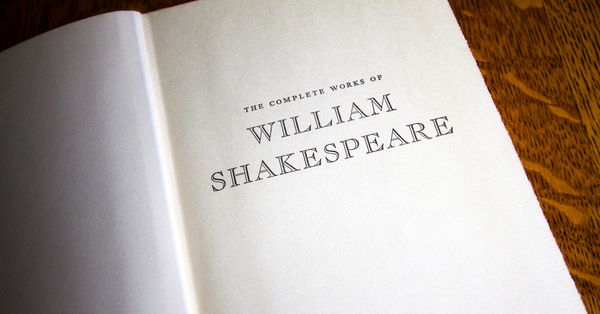
When discussing the foundations of modern theatre, the name William Shakespeare is impossible to ignore. Often referred to as one of the greatest playwrights in history, Shakespeare’s work has shaped storytelling, performance, and language. Dive into the history of William Shakespeare (abridged) to see how Shakespeare’s legacy has shaped theatre today.
Early Life and Background

William Shakespeare was born on April 23rd, 1564, in Stratford-upon-Avon, England; the month and year are confirmed, but the exact date has not been officially recorded. Shakespeare also died on his birthday in 1616 at the age of 52. While records of his early education are limited, it is widely believed that he attended a local grammar school, where he studied Latin and classical literature—an influence that later permeated his writing.
In his early adulthood, Shakespeare moved to London, where he began building his career in the theatre world as both an actor and playwright. This transition marked the beginning of a body of work that would become central to theatre as we know it today.
The Rise of a Playwright

Shakespeare wrote approximately 37 plays, along with numerous sonnets and poems. Some of his most well-known plays include Hamlet, Romeo and Juliet, and Macbeth/The Scottish Play
One of the defining aspects of Shakespeare’s writing is his ability to balance poetic language with deeply human experiences. His characters face love, ambition, jealousy, grief, and power—making his work feel just as relevant today as it did in the 16th and 17th centuries.
Shakespeare was also a shareholder in the Lord Chamberlain’s Men, a leading acting company of the time. This connection gave him both creative influence and financial stability, allowing his plays to be performed regularly in London.
The Globe Theatre and Performance

Some of Shakespeare’s works were performed at the iconic Globe Theatre. The structure of the Globe influenced how plays were written and staged, encouraging strong visuals, direct audience engagement, and dynamic performances. The Rose at Blue Lake (pictured below) is even modeled after the Globe Theatre as an Elizabethan theatre.
Unlike modern theatre, productions during Shakespeare’s time relied on minimal sets and quick transitions. The language and performances carried the storytelling—something that continues to influence how Shakespeare is staged today, especially in community and educational theatre settings.

Lasting Impact on Theatre
William Shakespeare’s influence extends far beyond his lifetime. His work introduced and popularized storytelling techniques, character archetypes, and phrases that are still used today. From soliloquies that reveal a character’s inner thoughts to complex ensemble-driven narratives, many theatrical conventions can be traced back to his plays.
For performers and theatre makers, Shakespeare often serves as both a challenge and a milestone. His work encourages strong vocal technique, text analysis, and collaboration—skills that translate across all areas of theatre.
Why Shakespeare Still Matters
Despite being written over 400 years ago, Shakespeare’s plays continue to be produced around the world. Modern plays and musicals are adapted from Shakespeare’s original work, such as:
- West Side Story
- The Complete Works of Shakespeare (Abridged)
- Goodnight Desdemona (Good Morning Juliet)
- Something Rotten!
- Kiss Me, Kate
- I Hate Hamlet
Understanding Shakespeare is not just about studying history—it’s about recognizing the foundation of the stories we continue to tell today.
Whether you’re reading your first monologue or producing a full-scale show, exploring the work of William Shakespeare offers valuable insight into both the past and future of theatre.
Leave a Reply