
Every scenic designer, at every level, started somewhere. Most of them started exactly where you are: staring at a script, not entirely sure where to begin, wondering if their ideas are good enough. They are. The ideas aren’t the hard part. The process is what gets you there.
Robert Edmond Jones, the man often credited with establishing scenic design as a profession in America, said it clearly: “A stage setting is not a background; it is an environment. Players act in a setting, not against it.” That distinction, between a background and an environment, is the difference between planning a set and designing one. Before you pick up a pencil or open a reference book, there’s one question worth sitting with: what does this story need?
Adolphe Appia, a scenic designer who influenced Robert Edmond Jones, believed in artistic unity. Starting out in music, he was uninspired by the overloaded sets and two-dimensional painting that constituted most operas of the day. He began to explore the use of light, shadow, and abstraction. Experimenting with scale, shape, and levels, he reimagined what a stage could look like.

Read the Script, then Read it Again
The first reading is about the story. The second is about noticing. What do the stage directions tell you? What’s the time period, the season, the time of day? Are entrances and exits noted or implied? What practical effects does the story require, like the three walls that fly away in Lauren Gunderson’s “I and You” or a house that starts on fire like the National Theatre’s “Jane Eyre”? Take careful notes as a scenic designer. Anything unclear belongs on the table at your first design meeting.

Get into Conversations with the Director Early
Do directors see the world of the play as realistic? Abstract? Symbolic? Understanding their vision before you put pencil to paper saves everyone time and shapes everything that follows.
Designer Riccardo Hernández believes that in order to “To do justice to the text you have to create an honest space”, which means there has to be something that helps to frame the piece. Is it the architecture of the stage? The materials at hand? The heart of the play that seeps into everything an audience sees in the design?


Sketch a First Draft
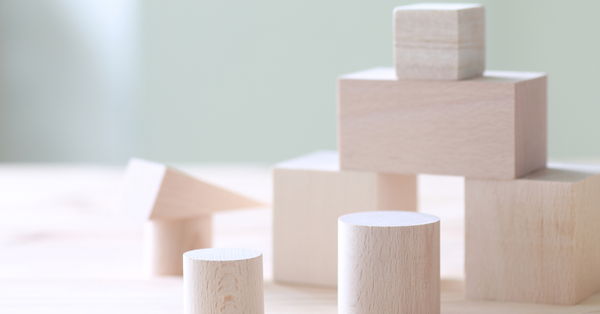
A pencil on a sketchpad, an Apple Pencil on an iPad, a pen on a napkin; it doesn’t matter. These are thumbnails, not finished drawings. They’re seeds. If sketching feels daunting, try children’s blocks. Build something, knock it down, build it differently. It’s fast, forgiving, and often surprisingly useful.
Be Bold
Some of the most memorable productions were defined by choices that challenge expectations. Rae Smith’s skyline for “War Horse” looks like torn paper. Es Devlin bordered “The Crucible” at the National Theatre’s Olivier with rain. Julie Taymor’s 1987 “Tempest” needed only sand and a scrim. David Korins built “Hamilton” on metaphor rather than place. Scenic design can be realistic, abstract, minimal, or defy description. What it doesn’t need to be is timid.

Bring your Sketches to Production Meetings
Even the rough sketches are valuable to the design process. That’s where you’ll learn how lighting is approaching the space, what direction costumes are taking, and what the budget will actually support. Sharing early ideas turns a presentation into a conversation, and that’s where the best collaboration happens.
Treat Limitations as Opportunities
A proscenium is a different problem than a thrust or a black box. The director’s requirements: a raised platform, a grand staircase, three entrances in a space with one door, aren’t obstacles – they’re the constraints that push a design somewhere it wouldn’t have gone otherwise. Often, creative problem-solving becomes much more interesting to watch onstage.
Additional Exploration
For further looking into scenic design, check out these resources:
Leave a Reply