
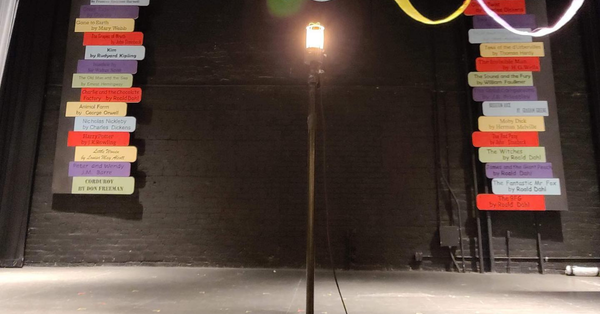
Long after the audience has gone home and the house lights are turned off, one light remains glowing on stage. Known as the ghost light, this single illuminated bulb has become one of theatre’s most enduring traditions—part practical safety measure, part superstition, and part shared cultural history.
What is a Ghost Light?
The ghost light serves a very real purpose. Theatre stages are filled with many hazards hard to see in the dark: trap doors, orchestra pits, uneven surfaces, cables, and set pieces. Leaving a light on helps prevent accidents for anyone who may enter the space after hours, whether it is a stage manager checking a prop, a custodian cleaning the theatre, or a technician preparing for the next day’s rehearsal. From a safety standpoint, the ghost light is a simple but effective solution.

What Does the Ghost Light Symbolize?
The ghost light carries deep symbolic meaning within the theatre community. The light is left on to appease the ghosts believed to inhabit theatres—spirits of performers, technicians, patrons, and even animals who never truly left the space. This light allows these ghosts to perform freely at night, preventing them from causing mischief during live performances. While these stories vary, they are often passed down from generation to generation as part of theatre’s oral tradition.
The light has also come to represent respect for the space itself. Theatres are places where countless stories have been told, emotions have been shared, and communities have been built. Leaving a light on acknowledges that history and honors the creative work that happens there. Seeing the ghost light glowing on an empty stage is a reminder that the theatre is always alive, even when no one is watching.
The Ghost Light Today

Today, the ghost light has taken on additional symbolism. It represents continuity, resilience, and care—especially during dark periods when stages are closed. During renovations, financial hardship, or even global shutdowns, images of ghost lights on empty stages have served as quiet reminders that theatre is resilient.
While the design of lights may vary, the tradition remains remarkably consistent across professional, educational, and community theatres. Some organizations even decorate or personalize their ghost lights, further weaving them into the identity of thean legend space.
The ghost light is more than a superstition or a safety precaution. It’s a tradition of theatre’s past, present, and future. Whether it’s to guide wandering spirits or simply to prevent a misstep in the dark, the ghost light stands watch.
Last Updated on: February 17, 2026
Leave a Reply