
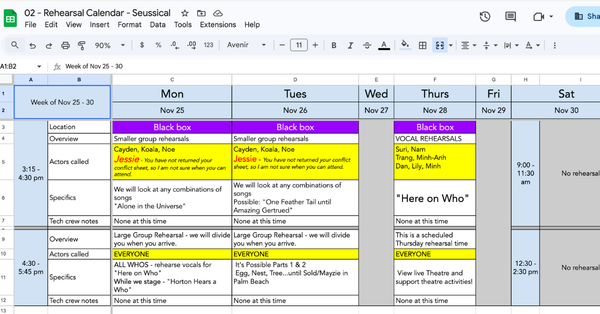
Whether you’re part of a multi-disciplinary arts team or a solo drama teacher at a small school, one way to reduce stress throughout the year is to spend some time on your production calendar. The calendar is never actually done. Think of it less like granite and more like sandstone; solid enough, but shaped by everything around it. Dates shift, conflicts pop up, and that one Saturday rehearsal will absolutely collide with something nobody saw coming. The goal isn’t a perfect production calendar on day one. The goal is a calendar that gets better every time it’s revisited.
Start earlier than necessary

Seriously, earlier. The sweet spot for starting a production or season calendar is February of the year prior to the production. That’s when athletic directors are mapping out tournaments, SAT dates are getting released, and schools are quietly locking in events that will absolutely affect the stage schedule.
Starting early means hunting down the “immovables” before they pop up as unwelcome surprises during a production. Athletics tournaments, academic milestones, community events already booked in a space, student commitments outside of school; all of it belongs on the radar before a single rehearsal gets scheduled.
Pro tip: Create your dream schedule despite all the obstacles, and have a few backups just in case. Enter it on the template, write it down! All of it, every sports weekend, every debate tournament, every school dance, every parent-teacher conference.
Your future self will thank you.
Bring in the Stakeholders
A production or season calendar doesn’t get built alone (and it shouldn’t!). Looping in athletic directors, activities directors, music or dance departments, and school administration early helps surface conflicts before they turn into full blown urgencies. It also helps to check in with students, because someone’s church lock-in, or Sally’s best friend’s birthday weekend at the theme park, will absolutely land on the big Saturday cue-to-cue if no one asks ahead of time.

Pro tip: Don’t forget the facilities team. The choir concert might not conflict with rehearsal, but setting up the bandshell and the risers just might! A quick conversation with facilities early in the process can head off the kind of last-minute space conflicts that nobody has time for during tech week.
For community theatres, the same idea applies. The more people consulted during the planning phase, the fewer surprise emails later.
Publish it, Then Make Revisions

This is the step that gets skipped more than any other. Dates sitting in an email chain or on a handout sent home once aren’t really “published”. The calendar needs to be displayed at every production meeting, live in the rehearsal space, and actively shared with everyone who has a stake in the schedule.
Internal deadlines belong there too; when posters are due, when the show shirts need to be ordered (Hint: set this one a week earlier than you think), when the program PDF goes to the copy center. If it only lives in someone’s inbox, it might as well not exist.
Pro tip: Keep it simple for the performers and parents, make it a habit to send out the “Rehearsal schedule this week” every Sunday. Include who is called, when they are called, where the rehearsal is, and what you will be working on. This should be included in every rehearsal report as well.
Revisit it regularly
Even a beautifully built calendar will need adjustments (that’s not failure, that’s theatre). A calendar that gets reviewed and updated throughout the process is worth ten times more than one that gets filed away after the planning phase. Handing calendar maintenance off to someone with a sharp eye for detail (a stage manager or an assistant director) keeps changes from slipping through the cracks.
Pro tip: Check in regularly with your other performing arts teachers. A little collaboration goes a long way.

A production calendar that bends without cracking is one of the quietest and most powerful tools in any theatre director’s toolkit. Start early, talk to everyone, publish it everywhere, and never stop tweaking – that’s the whole secret.
Leave a Reply